
A vision for
hybrid work
Managers and teams that know how to make the most of hybrid work can be engaged, effective and collaborative.
But they need support to get there. Many organizations that made the transition to hybrid work during the Covid pandemic are still looking for the right mix of remote and office time, as well as for the policies and practices that enable hybrid success.
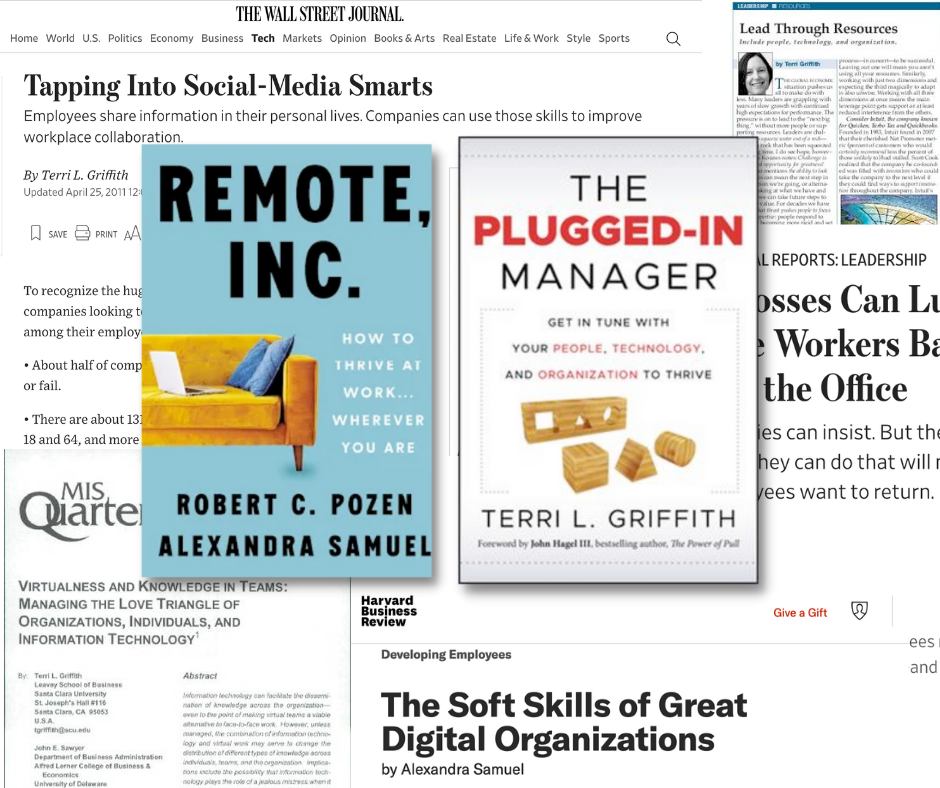
We're here to help. We've spent more than two decades building digital workplaces: We've done the research, published the books and articles and delivered the trainings that enable effective hybrid teams. We know that every organization and department has its own unique challenges, its own culture and its own best version of hybrid.
Let us help you find your version of hybrid. Contact us to find out how we can work together.


Here’s how we do it.

Find your answerable questions.
We help you clarify your research and content goals to zero in on your answerable questions: the puzzles or problems you can credibly address in order to drive your growth and deliver insight that others will value, too.
Gain insight from evidence.
All our thought-leadership projects are built on a foundation of original data analysis and peer-reviewed research. We dig into the latest academic work in related fields so you can build on credible evidence to advance your own perspective. Our flagship projects are built on fresh analysis of both proprietary and public data sets (like surveys, social media data, and government statistics) to drive findings and infographics that people are eager to share.
Channel your voice.
The right vehicle for your message depends on your subject, brand and audience. We help you choose the right formats for delivering your results—whether that’s a white paper, a website, a blog series, a TED talk or a format we dream up together. Then we work with our in-house creatives and a network of expert partners to craft your deliverables to the highest standards.
How we work
We lead research, training and communications projects that transform how organizations think—and how they tell their story. Here’s how we do it:
Model
We all produce better work when we draw from multiple sectors, perspectives and disciplines.
Our work convenes…
- Academics and executives
- Editors and activists
- Technologists and creatives
- Data analysts and storytellers
Insight
We believe expertise matters. Our projects are led by subject matter experts with decades of research and experience in….
- Remote and digital work
- Diversity & inclusion
- Customer service & care
- Cybersecurity
- Workplace neurodiversity
Deliverables
We deliver your project in the form that’s right for your audience and goals.
Past projects have included…